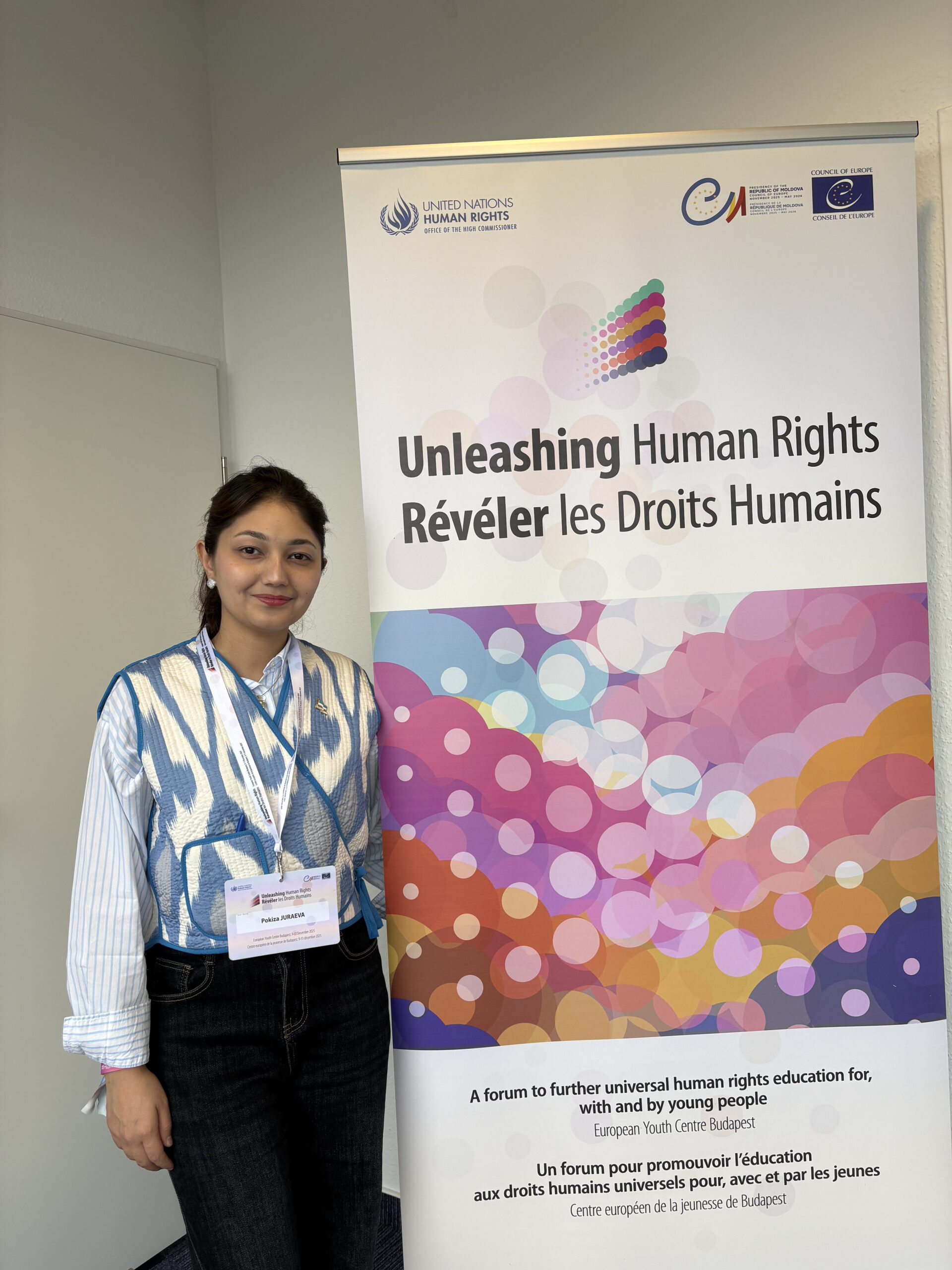
Participating in the Forum on Human Rights Education – Unleashing Human Rights in Budapest
from 9 to 11 December 2025 was a truly transformative experience for me. The Forum,
organized by the Council of Europe and the Office of the United Nations High Commissioner for
Human Rights together with several partners, brought together more than 250 participants from
around the world. However, for me, the Budapest Forum was not just a conference — it was an
experience that went far beyond a typical academic or professional gathering.
What made the Forum unique was the opportunity to meet passionate individuals from diverse
regions who are deeply committed to advancing human rights education (HRE). Participants
included educators, researchers, and practitioners working in different social contexts but sharing
the same commitment to promoting human rights values. Listening to their experiences and
learning from their work gave me valuable insights into how human rights education can be
implemented in different communities and contexts.
One of the most meaningful aspects of the Forum was that participants were not simply passive
listeners. Instead, we actively engaged in discussions, workshops, and collaborative sessions.
These interactive spaces allowed us to exchange ideas, share experiences from our own regions,
and collectively reflect on the challenges that human rights education is facing today.
During the Forum, I participated in Working Group 10 on Environment and Climate Crisis,
facilitated by Orla Belhaj Saad with Lisa Mean as the resource person. In this group, we
discussed the pressing environmental challenges facing the world today and explored how
human rights education can contribute to addressing climate and environmental issues.
Participants shared examples from their professional and community work, explaining how they
contribute to environmental protection, climate awareness, and sustainability initiatives. Hearing
these experiences helped us collectively think about practical solutions and ways to strengthen
the role of human rights education in tackling environmental crises.
I also participated in Workshop 10: “Working through and with the United Nations: a
conversation with the Youth and the Human Rights Offices,” organized by the United
Nations Youth Office and the Office of the High Commissioner for Human Rights. This
workshop explored how young human rights educators and activists can influence decision-
making processes within the United Nations system and translate that influence into meaningful
impact at the national level. Through the presentations and discussions, I discovered many new
opportunities for youth engagement and collaboration with international institutions. The session
also provided insights into ongoing initiatives led by the United Nations Youth Office and the
UN Human Rights Office, highlighting how young people can actively contribute to human
rights work at the global level.
Another important theme discussed throughout the Forum was the digitalization of human
rights education. Participants reflected on how digital tools and online platforms can expand
access to human rights knowledge, particularly for young people and marginalized communities.
At the same time, we also discussed the ethical challenges and risks associated with digital
technologies, emphasizing the importance of ensuring that digital transformation supports
inclusive and equitable education.
During the Forum, I also had the opportunity to give an interview to the Office of the High
Commissioner for Human Rights, where I shared my perspective on the importance of human
rights education in everyday life. 1 In the interview, I emphasized that human rights begin in our
daily environments — within our families, kindergartens, and schools. Parents, for example, can
teach children from an early age to respect the environment by saving water and protecting
nature, which contributes to sustainability. Similarly, early education institutions can teach
children about respect, equality, and non-violence. Encouraging boys to respect girls and avoid
bullying from an early age can help prevent gender discrimination and even reduce domestic
violence in the future.
I strongly believe that when children grow up with the right mindset — one based on respect,
equality, and empathy — they become adults who understand and respect the rights of others.
Human rights education therefore, plays a crucial role in shaping future generations who are
capable of building more inclusive and peaceful societies.
Ultimately, the Budapest Forum reinforced my belief that human rights education is a powerful
tool for social transformation. Despite the many global challenges we face today, there is a
global community of people working tirelessly to promote human rights values. The Forum
reminded me that human rights belong to everyone. Although we may differ in age, gender, race,
nationality, or culture, we all share the same fundamental rights and dignity.
Pokiza Juraeva (MAHRS Alumna 2025)