
The Regional Classroom on “Children’s Rights to Family Care in Central Asia” took place at the Royal Beach Resort on Issyk-Kul Lake, Kyrgyzstan
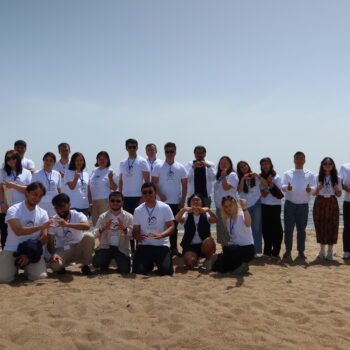
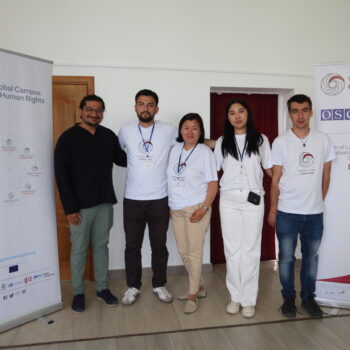
From 29 May to 1 June 2026, the Regional Classroom on “Children’s Rights to Family Care in Central Asia” took place at the Royal Beach Resort on Issyk-Kul Lake, Kyrgyzstan. Organized by Global Campus Central Asia, the event brought together students, alumni, researchers, and experts committed to advancing children’s rights and strengthening child protection systems across the region.
The Regional Classroom aimed to provide participants with a comprehensive understanding of children’s right to family care, a fundamental principle enshrined in international human rights law, particularly the UN Convention on the Rights of the Child. The programme emphasized the importance of ensuring that every child grows up in a safe, supportive, and nurturing family environment. It also addressed persistent challenges leading to family separation and the institutionalization of children in Central Asia and beyond.
The programme began on 29 May with participants’ arrival from Bishkek to Issyk-Kul, offering an opportunity for networking and informal exchange before the academic sessions. The official opening on 30 May featured welcoming remarks by Dr. Pal Dunay, Director of the OSCE Academy in Bishkek, and Dr. Anja Mihr, Academic Director of the MAHRS Programme. Both speakers highlighted the shared responsibility of governments, civil society, and international organizations in promoting family-based care systems.
The first academic session, led by Dr. Aigerim Mussabalinova, explored the historical development of children’s rights to family care in Central Asia. Drawing on attachment theory, the session emphasized the critical role of stable family environments in children’s emotional, psychological, and social development. The second session, delivered by Nazgul Turdubekova, examined child protection systems across the region. Participants discussed policy reforms, the role of social workers, and key implementation challenges, including limited resources, insufficient support services, and institutional barriers. The session also highlighted the long-term economic benefits of deinstitutionalization and investment in family-based care.
The third session focused on international best practices in reforming residential care systems. Case studies from Moldova and Ukraine demonstrated successful strategies for reducing reliance on institutions and strengthening alternative care models, offering lessons applicable to Central Asia. The final session of the day addressed contemporary drivers of family separation, including poverty, migration, social exclusion, and weak social support systems. Participants engaged in critical reflection on how these factors shape child protection outcomes across the region.
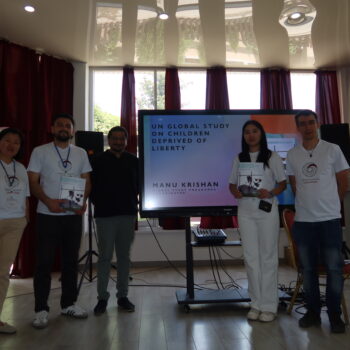
On 31 May, the programme continued with a focus on children deprived of liberty and broader child welfare systems. Manu Krishan introduced the UN Global Study on Children Deprived of Liberty, highlighting both global trends and regional dynamics. The session underscored the importance of safeguarding children’s dignity and rights while ensuring access to appropriate care.
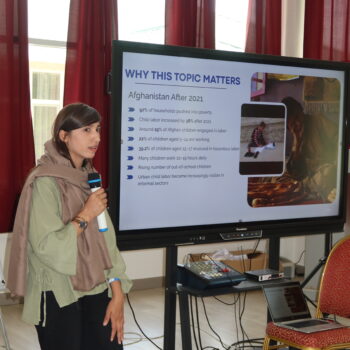
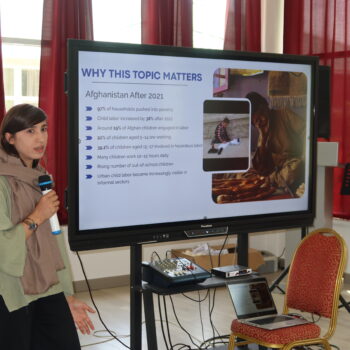
A subsequent session explored sustainable child welfare systems, including innovative financing mechanisms, social enterprises, and long-term systemic reforms aimed at improving child protection outcomes. Maryam Nesar, a MAHRS alumna, presented her research on “Urban Hazardous Child Labor in Post-2021 Afghanistan,” assessing compliance with Article 32 of the Convention on the Rights of the Child. Her presentation shed light on ongoing challenges related to child labor and reinforced the relevance of international standards in protecting children from exploitation.
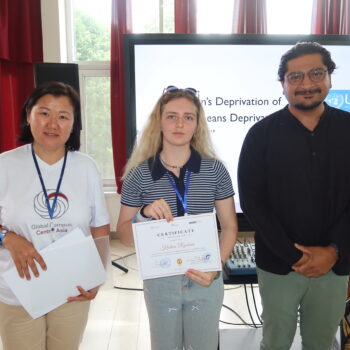
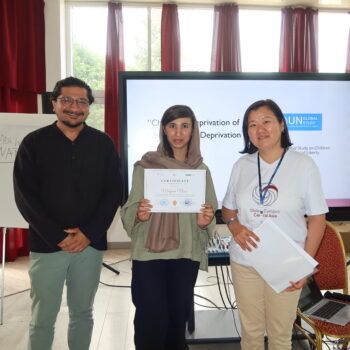
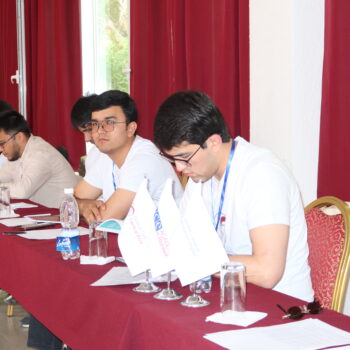
A key component of the programme was the practical group exercise, during which participants analyzed issues related to deprivation of liberty and institutional care in Central Asian countries. Through collaborative work, participants applied theoretical knowledge to real-world contexts and presented their findings and recommendations. The Regional Classroom concluded with a wrap-up session and certificate ceremony. Participants reflected on their learning and discussed how to apply their knowledge in academic, professional, and advocacy contexts.
Overall, the Regional Classroom 2026 served as a valuable platform for learning, networking, and exchanging best practices. It deepened participants’ understanding of family care, child protection systems, deinstitutionalization, and international human rights standards. Most importantly, it reinforced the principle that every child has the right to grow up in a family environment and that protecting this right requires coordinated efforts across governments, civil society, and international institutions.