
Interdisciplinary Summer School on the Rights of Children and Future Generations: Reflections from Sarajevo by Stefan Pacher
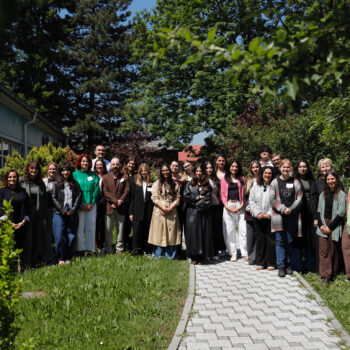
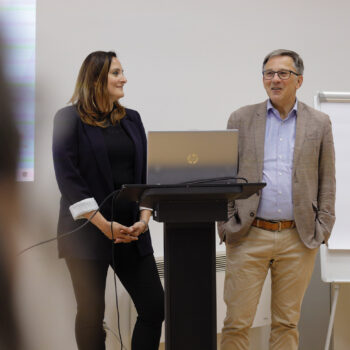
From 18 to 22 May 2026, I took part in the Global Campus South East Europe’s first
Interdisciplinary Summer School on the Rights of Children and Future Generations in Sarajevo.
Together with students, researchers, and practitioners from across the Global Campus network,
the program offered a platform to explore one of the core contemporary questions of human
rights: how can frameworks ensure universality not just across populations and borders, but also
across time?
The summer school was inspired by the 2023 Maastricht Principles on the Human Rights of
Future Generations, and we had the chance to investigate the topic from three dimensions:
understanding the legal philosophy behind future generations, exploring their relationship with
childrens rights, and developing practical mechanisms that include future generations into the
decision-making processes of today.
Re-thinking Human Rights Through Future Generations
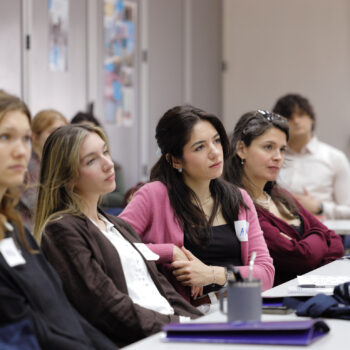
The beginning of the week focused on legal and philosophical foundations of future generations
in international law. Through lectures, discussions, and interdisciplinary exchanges, we reflected
on the universality of human rights and what this principle means when extended beyond the
present.
What stood out to me most was that human rights should not only be universal across people, but
also across time. If human dignity is truly universal, then the interests of future generations
deserve the same respect and consideration as those living today. This perspective was
particularly relevant in discussions on environmental rights, sustainable development, climate
change, and AI. While these developments will profoundly shape the lives of future generations,
their interests remain largely underrepresented in contemporary political debates and legal
decision-making. Together with professors and peers, I explored how human rights frameworks
can adapt to these long-term challenges.
Children’s rights: A Bridge Between Present and Future?
Building on these theoretical ideas, we also looked at practical legal challenges: how can the
rights of future generations be operationalized legally and politically?
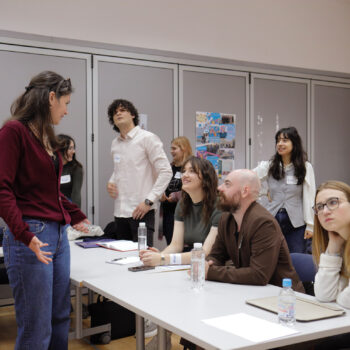
While we reflected on this challenge in focused groups and together with seasoned experts,
children’s rights and the CRC emerged as the crucial link of intergenerational justice. Our
conclusions confirmed that genuine participation requires more than tokenism. Only when
decision-making processes become responsive to the perspectives of children and young people
can policy outcomes reflect the genuine interests of future generations. In this way, strengthening
children's participation today ensures that decisions reflect not only immediate interests, but also
the needs and aspirations of the generations yet to come.
From Principles to Practice
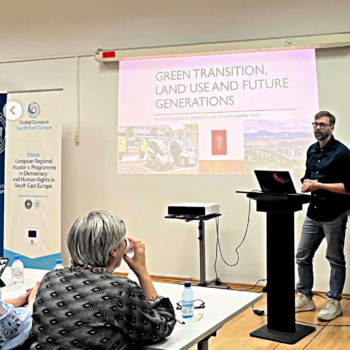
During the final day of the summer school, I had the chance to draw on my background in
development economics to put theory into practice. Together with other students, I prepared a
presentation on socio-ecological conflicts around lithium mining in Serbia’s Jadar region. Our
case study highlighted an interesting example of the tensions between economic development
and intergenerational justice: on the one hand, the extraction of green transition materials may
generate employment opportunities, economic growth, and long-term development benefits. Yet,
big mining projects often create significant environmental and social risks that affect primarily
future generations.
To address this challenge, our focus group developed a ‘Youth Impact Assessment’ framework
that could be integrated into existing Environmental Impact Assessment procedures. Such a
mechanism would require decision-makers to systematically consider the voices of children
before granting approval. If supported by international legal frameworks and embedded within
national legislation, such mechanism could ensure genuine representation of future generations
through the voices of children.
Looking Forward (And Across Borders)
To me, the interdisciplinary Summer School on Children’s Rights and Future Generations was an
outstanding and impactful event. My key take-away is that, in the face of climate change (and
‘polycrisis’), advancing the rights of future generations should no longer a theoretical idea, but
an urgent necessity. The week in Sarajevo highlighted that this necessity is not simply a legal
issue, but it is equally economic, political and philosophical. Field visits to Sarajevo’s War
Childhood Museum and the regional UNESCO office also provided touching and vibrant
insights into the regional dynamics of children’s right across different aspects.
The questions of environmental change and future generations are as well a major concern in
Central Asia, where the impact of climate change is particularly visible and has serious effects on
youth.
Ultimately, the Summer School reinforced the need to think beyond academic and national
borders to develop just and actionable mechanisms, a principle that the network of the Global
Campus of Human Rights already puts into practice.
#GCSEE #RightLivelyhoods #Interdisciplinary #SummerSchool #GCCentralAsia