


Safina Saidibroimova, MAHRS Alumna'26 Advances Corporate Accountability at Manushya Foundation
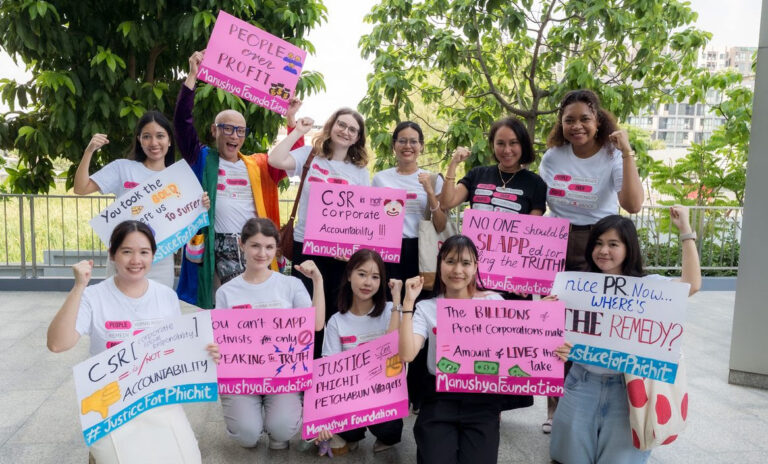
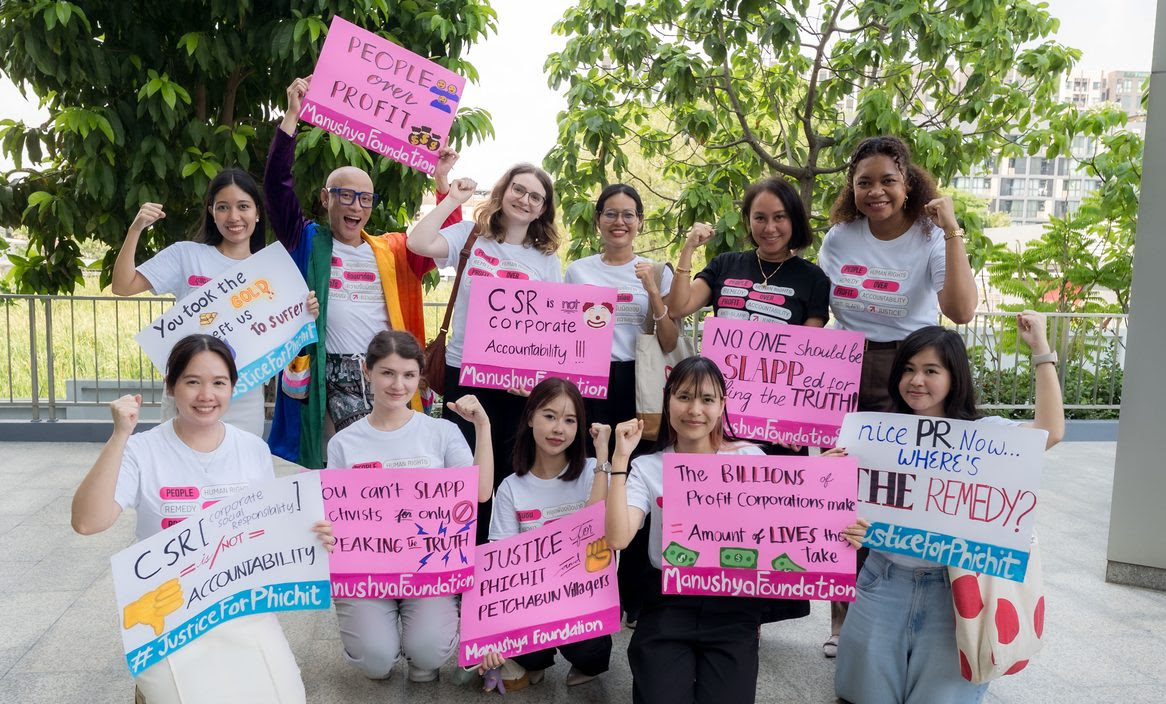
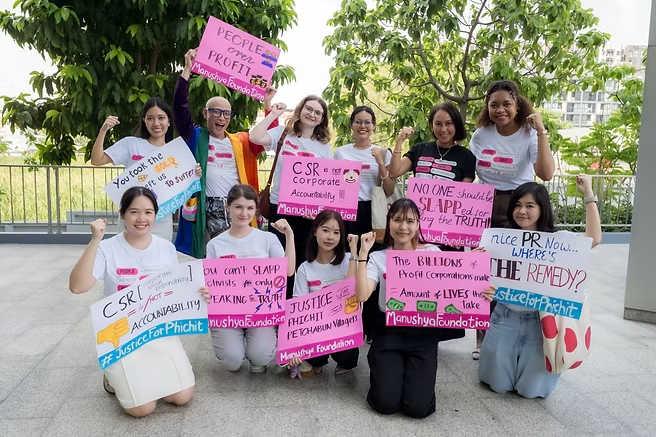
Safina Saidibroimova, a 2026 graduate of the MAHRS Programme, is doing her internship at Manushya Foundation thanks to the interregional exchange between GC hubs MAHRS and APMA, where she spent her mobility semester last year. Safina secured the prestigious Global Campus Internship Grant to pursue her internship at this organisation. Now, as the organization celebrates its landmark victory in Thailand’s first environmental class action lawsuit against Akara Resources’ Chatree Gold Mine, Safina’s contributions underscore the power of global youth networks in advancing corporate accountability.
More information about the case:
Accountability Wins Over Impunity: Phichit Villagers victorious in decade-long legal struggle against Australian-owned gold mine –
Thai court orders compensation and environmental rehabilitation in country’s first environmental class action lawsuit, setting a major precedent for corporate accountability in Thailand.
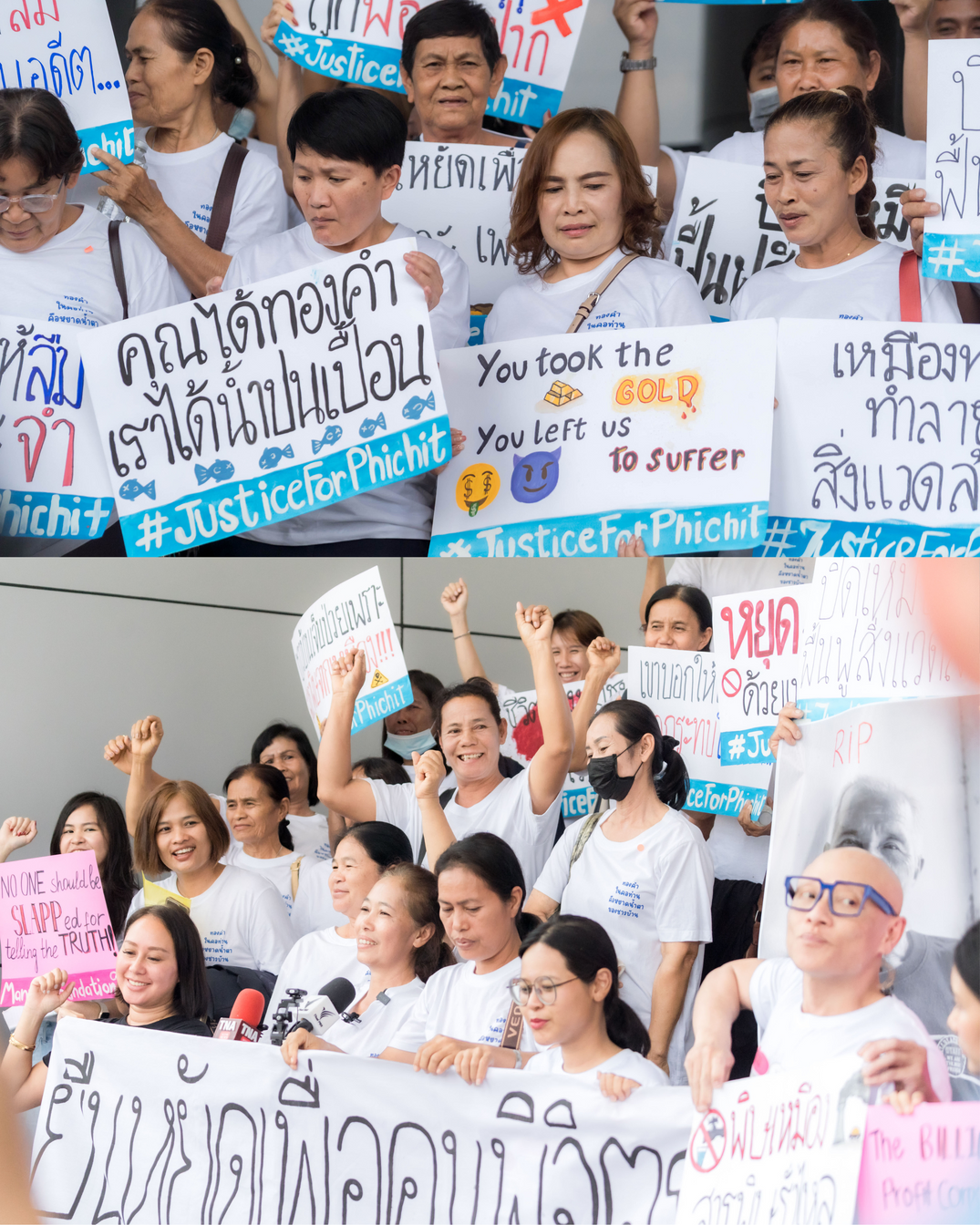
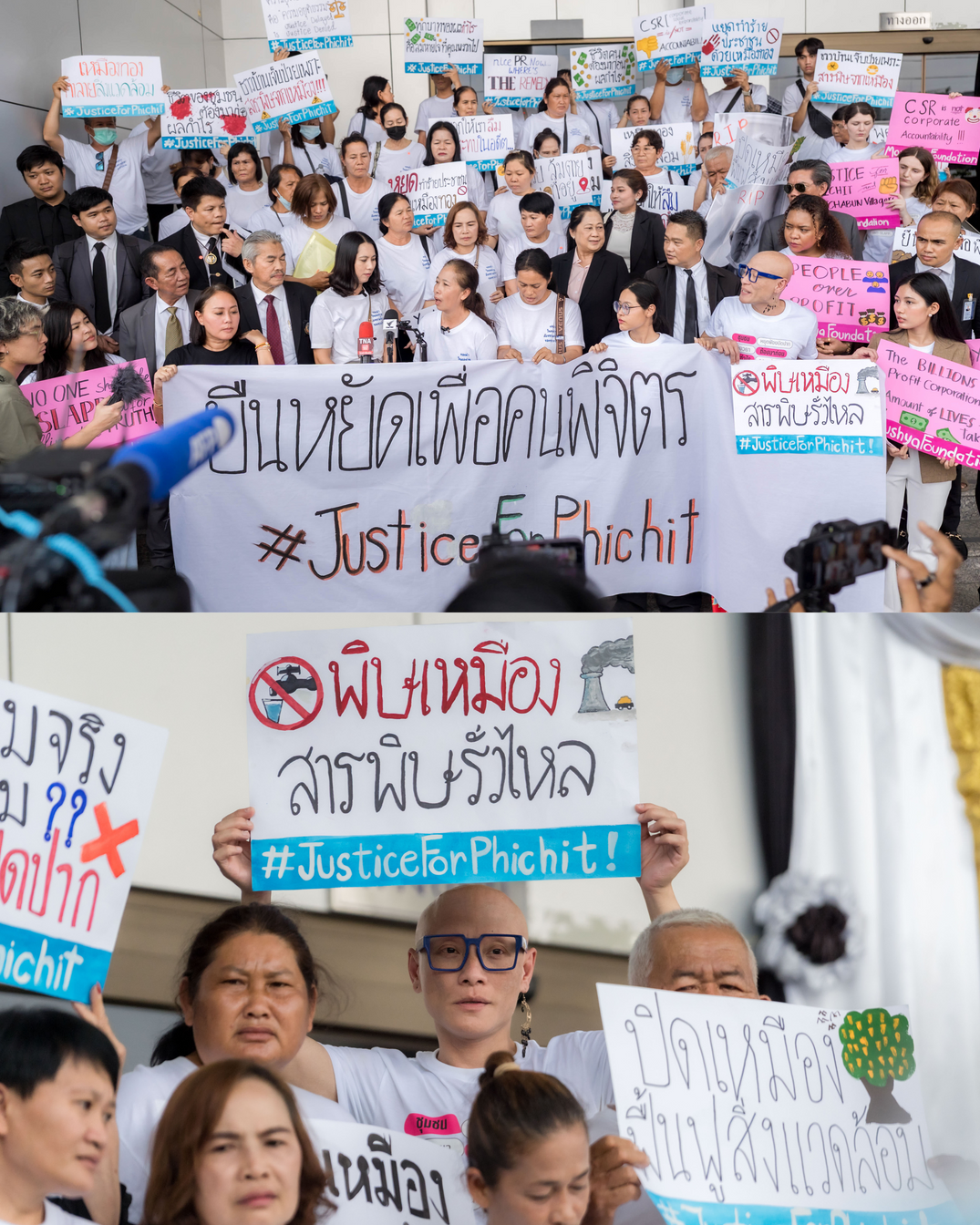
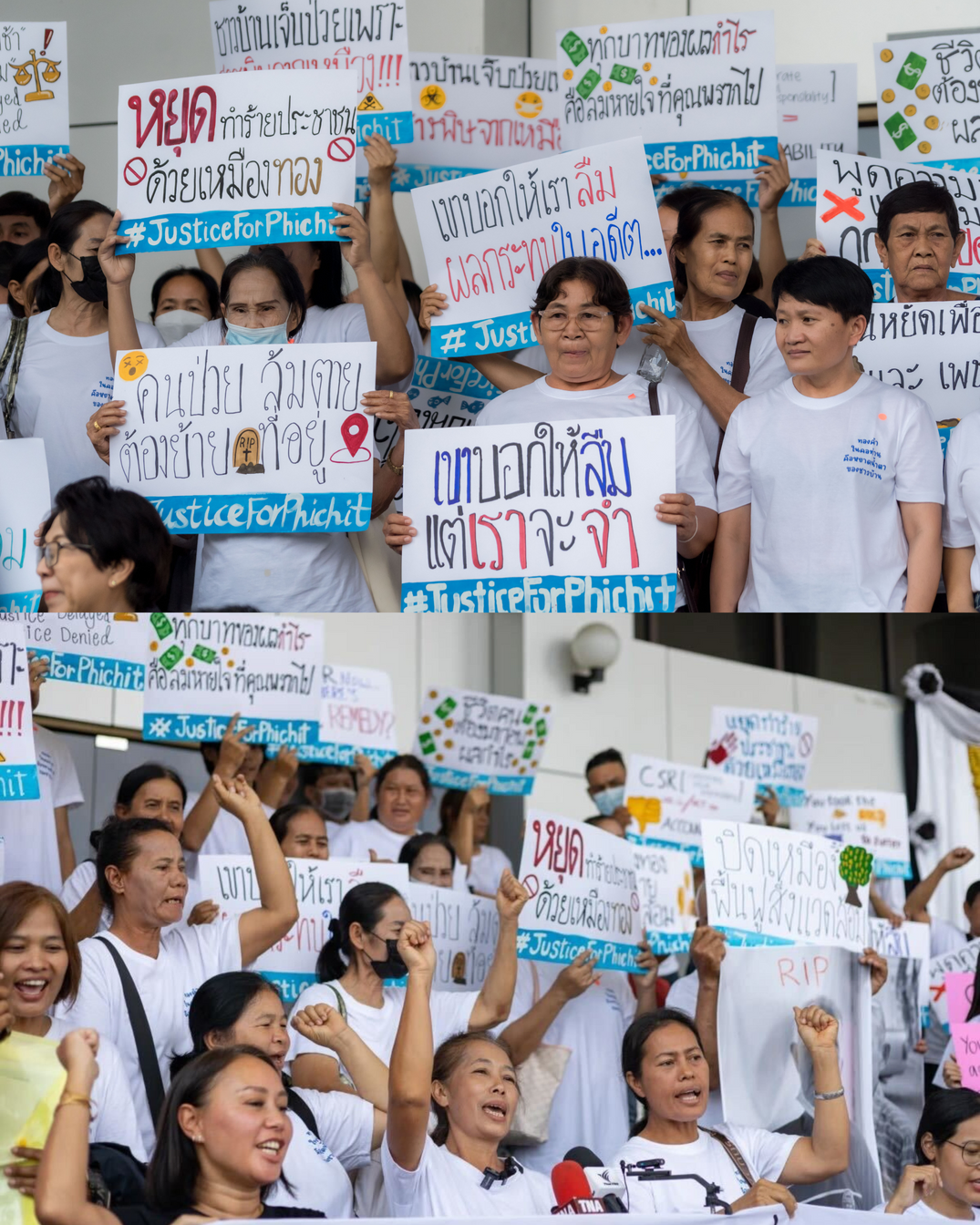
BANGKOK, THAILAND | 24 March 2026 – After a decade-long wait, villagers from Phichit and Phetchabun provinces have secured a landmark victory. On 24 March, Thailand’s Ratchada Civil Court ordered Akara Resources to compensate nearly 400 community members for harms caused by its mining operations at the Chatree Gold Mine, the country’s largest gold mine. Since the mine began operations in 2001 affected communities have reported toxic contamination of their agricultural land and bodies, destruction of livelihoods, and long-term impacts on their physical and mental health. This case marks Thailand’s first environmental class action lawsuit, setting a powerful precedent for corporate accountability and climate justice in the country. The ruling sends a strong signal not only within Thailand, but across Southeast Asia, where communities continue to face barriers in holding corporations liable for human rights violations and environmental destruction.
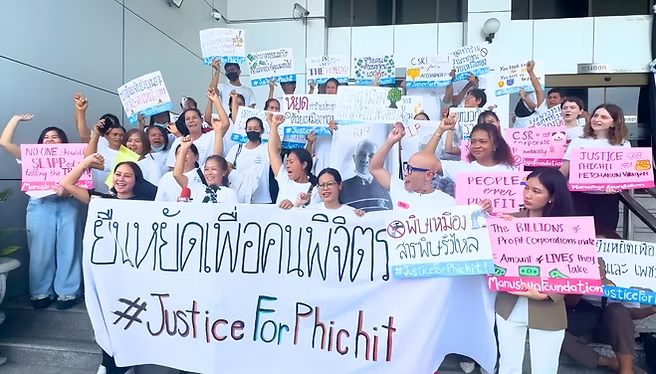
In their major ruling, the court also ruled for the closing of Tailings Storage Facility 1 (TSF 1), one of the gold mine’s two massive waste pits, and rehabilitation of water canals and the surrounding land, citing the villagers presented credible evidence of the mine’s impacts. Close to fifty villagers travelled over six hours to hear the verdict in person, joined by human rights defenders across Thailand, and Manushya Foundation, which has defended the case as their international human rights counsel since 2019. In the wait for this decade-long verdict, Akara weaponised Strategic Lawsuits Against Public Participation (SLAPPs) filing over 40 separate defamation cases to villagers, academics, and human rights defenders speaking up against the mining operation’s harms.
The court found that the villagers presented credible and persuasive scientific and lived evidence demonstrating that mining operations caused environmental and health harms.
On compliance with Thai government-set environmental regulations: Akara argued that it had complied with Thailand’s Environmental Impact Assessment (EIA) regulations.
The court held that regulatory compliance alone does not negate evidence of water contamination, affirming that administrative compliance cannot override demonstrated environmental damage.
On toxic contamination in villagers’ bodies: Akara claimed that elevated arsenic and cyanide levels in villagers’ blood were due to excessive seafood consumption.
The court overtly rejected this argument, recognizing this claim as a distraction from the fact that the test results are evidence of toxic exposure linked to the mining operations.
On scientific evidence proving chemical contamination of farmlands: Akara attempted to discredit Assoc. Prof. Dr. Tanapon Phenrat from Naresuan University, one of the researchers of an independent study published in 2017 revealing chemical contamination in crops near the mine.
The court affirmed the credibility of the study, recognizing it as key evidence of contamination affecting agricultural land and surrounding communities.
What do Villagers get?
The court ordered Akara Resources to provide compensation to affected villagers across several categories of harm, while also opening the possibility for additional affected individuals to receive remedy under the defined criteria.
Physical Health Impacts:
Individuals aged 15 and under: 200,000 baht (roughly USD 6,250)
Individuals over 15: 100,000 baht (roughly USD 3,125)
Individuals aged 15 and under with contamination levels below thresholds: 100,000 baht (roughly USD 3,125)
Individuals over 15 with levels below thresholds: 50,000 baht (roughly USD 1,563)
Mental Health Impacts:
Above contamination thresholds: 20,000 baht (roughly USD 625)
Below thresholds: 10,000 baht (roughly USD 3,125)
Additional compensation:
Medical treatment support: 5,000 baht per person (roughly USD 156)
Costs of purchasing safe food and drinking water: 5,000 baht per person (roughly USD 156)
Loss of access to natural water resources and related livelihoods: 5,000 baht per person (roughly USD 156)
Environmental remedies ordered by the court:
Rehabilitation of contaminated public canals and water sources
Full responsibility for treatment of contaminated soil and water in surrounding areas
Closure and filling of TSF1, one of the gold mine’s two massive waste pits
While the ruling represents a historic victory, Manushya Foundation, the international human rights lawyers defending this case since 2019 emphasize that the struggle for justice is not yet complete. Although the court clearly established corporate liability, the level of compensation awarded falls short of the full extent of harm suffered, and further legal and advocacy national and international actions will be exhausted. Their confidence in continuing the struggle is bolstered by the court’s ruling, and therefore anyone who speaks up cannot be silenced or intimidated by SLAPPs anymore.
“This is a powerful step forward, but the fight is not over,” said Emilie Palamy Pradichit, Founder and Executive Director of Manushya Foundation.
Emilie Palamy continues, “The court’s order to close TSF1 gives hope to affected communities. We will continue pursuing justice and remedy, including for impacts linked to TSF2 (Tailings Storage Facility 2).” Pimkwan Sinthornthamat, a village leader, stated on behalf of the communities:
“Together, we will continue to pursue justice beyond this case… We strongly hope to see the restoration of a healthy natural environment, and that they will be able to live good lives and in normal peace as they should.”
“Akara and Kingsgate cannot benefit from operating in Thailand while dismissing the authority of its courts when they are held accountable; that is not how the rule of law works. They can’t pick and choose when the law applies to them.”
Manushya Foundation will continue to defend the communities and fight for genuine corporate accountability through:
Further legal action related to Tailings Storage Facility 2 (TSF2)
Efforts to secure higher and more adequate compensation
Potential legal action against state authorities for failure to protect community rights
International accountability mechanisms, including an OECD complaint targeting the mine’s parent company, Australia-based Kingsgate Consolidated
This is a cautionary tale for all other companies seeking to invest in Thailand: People’s rights precede Profit.
The struggle continues, but today, accountability won over impunity.
Source: https://www.manushyafoundation.org/post/accountability-wins-over-impunity-phichit-villagers-victorious-in-decade-long-legal-struggle-agains